

You've booked the crew, picked your colors, and circled the start date. Now you're wondering: what should I do before the painters show up? The good news is that prep on your end is light — most of the items below take just a few minutes — but doing them makes the whole job faster, cleaner, and, most important, keeps your belongings safe.
Think of it as a simple division of labor: you handle the personal items only you should touch — valuables, electronics, anything fragile or irreplaceable — and we handle all of the technical protection: covering furniture, masking trim, laying drop cloths, and the careful prep that makes the finish last. Here's exactly what to do before paint day, and what you can safely leave to us.
Why good prep matters
Professional painters can cut in razor-sharp lines and lay down flawless color — but only if they can move freely and protect your home. Clear rooms mean fewer obstacles, less dust settling into wet paint, and a cleaner, longer-lasting result.
There's a speed-and-safety angle too. A clear path lets ladders and gear move without bumping your walls or furniture, the crew works faster, and nothing valuable ever sits in the splash zone. Ten minutes of prep on your side genuinely shows up in the quality and the smoothness of the whole project.
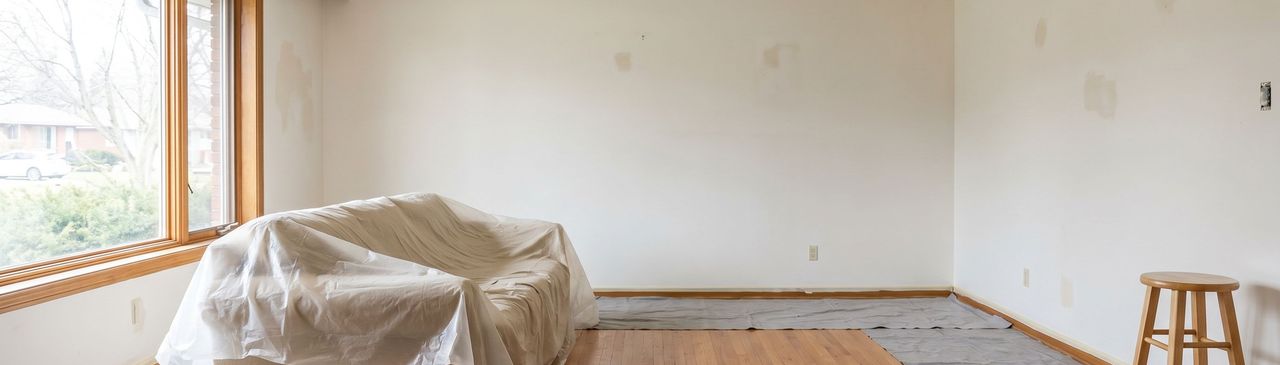
Your interior painting prep checklist
1. Clear the walls
Remove artwork, mirrors, floating shelves, and decor. Pull nails, hooks, and tacks — especially where we'll patch holes. Store fragile pieces in a safe room.
2. Shift furniture to the room center
Slide couches, dressers, and bookcases about three feet from the walls. Too heavy? Let us know — our crew can handle it.
3. Take down curtains and window treatments
Remove rods, blinds, and valances around windows getting painted. Store hardware in labeled bags for quick re-installation.
4. Protect small items and breakables
Move vases, plants, and frames out of the splash zone. Cover dust-sensitive electronics or place them in a closet.
5. Unplug and relocate electronics
Laptops, TVs, and speakers don't mix with paint mist. Bundle loose cords so nobody trips while carrying ladders.
6. Create a clear path for the crew
Open hallways and staircases; we'll be carrying drop cloths and cans. Secure pets behind a gate, and leave driveway space near the door if you can.
7. Flag special requests early
Keeping an accent wall the same color? Need a water stain blocked or extra caulk around trim? Point it out during the walkthrough.
8. Relax — the technical prep is our job
No need to tape edges, lay plastic, or deep-clean floors. Give us breathing room and we'll handle the rest.
Day-of tips for a smooth project
- Set the thermostat between 65–75°F to help paint cure evenly.
- Keep a small box handy for last-minute knick-knacks that need relocating.
- Have questions? Walk the space with the crew lead before we start rolling.
A few Chattanooga-specific notes
Most prep is the same anywhere, but a couple of things come up often in homes around our area:
- Spring pollen. Chattanooga's pollen season is no joke. Tracked-in pollen and dust love to settle on fresh paint, so during peak weeks I keep entry mats down and limit how often exterior doors stay propped while we work — a small thing that keeps the finish clean.
- Summer humidity and the thermostat. That 65–75°F setting matters more here than in a dry climate. Stable indoor temperature and airflow help each coat cure evenly through our humid stretch — please don't switch the A/C off while we're mid-project.
- Older and historic homes. In established Chattanooga neighborhoods, pre-1978 homes can have lead-based layers and original plaster. If that's your home, mention it — it changes how we prep and contain, and it's worth flagging at the walkthrough.
None of this adds work for you — it's just part of how I scope an interior painting job for Chattanooga conditions. And if you plan to stay home during the work, a little prep makes that far more comfortable.
Frequently asked questions
How should I prepare my home before interior painters arrive?
Clear the walls (art, mirrors, hooks), move furniture toward the center of each room, take down curtains and blinds, protect or relocate electronics and breakables, and leave a clear path for the crew. The technical prep — taping, plastic, and drop cloths — is the painter's job.
Do I need to move my own furniture before painters come?
Move what you comfortably can to the center of the room. Heavy pieces — armoires, pianos, full bookcases — are fine to leave; a professional crew will shift and cover them. Just flag anything fragile or valuable ahead of time.
Should I clean my walls before painting?
A light dusting helps, and kitchen walls benefit from a quick de-grease, but you don't need to deep-clean. Your painter will spot-clean, sand, and prep the surfaces so the paint bonds properly.
How far from the wall should furniture be?
About three feet gives painters room to set up ladders, cut in, and roll without bumping anything. Centering the furniture and covering it is the standard.
What should I tell my painter before they start?
Point out accent walls staying the same color, water stains or cracks that need extra attention, pets in the home, and any rooms you'd like done first or last. A two-minute walkthrough prevents most surprises.