

Saturday morning, fresh coffee in hand, you finally notice the black marks by the sofa, that mystery dent in the hallway, and your toddler's crayon mural behind the TV. The first thought is predictable: “maybe I'll just spot-paint and save the weekend.” Sometimes that quick fix works. Other times it spirals into a patchy mess that costs more than a full repaint. Here's how to decide.
The quick rule: if the damage is small, isolated, and the paint is fairly new — and you still have the original can — a touch-up is worth a shot. If the marks are many, the paint is several years old, or you don't know the exact color and sheen, repainting the whole wall or room almost always looks better and spares you the frustration of a blotchy result. The rest of this guide helps you tell which situation you're actually in.
60-second cheat sheet
| Scenario | Touch-up wins | Repaint wins |
|---|---|---|
| Damage size | One-inch scuffs or nail holes | Dents, scratches, kid art, multiple walls |
| Paint age | Less than 2 years old | 3+ years (color fading & sheen loss) |
| Color match | Leftover original paint, stored well | No record of the exact shade or sheen |
| Goal | Hide a blemish before guests arrive | Refresh a room for resale or the long term |
| Budget vs. time | $40 & 20 minutes | $250–$550 with a pro, done in one day |
Why spot-painting looks so tempting
It's cheap (one quart and a mini-roller, under $40), fast (clean, roll, dry), and satisfying — watching an ugly scuff disappear feels like magic.
How to nail the perfect touch-up: wash the spot with mild soap and let it dry; feather the edges with 220-grit sandpaper; prime stains so they don't bleed through; use a 3/8-inch nap mini-roller to match texture; and blend two to three inches past the blemish so sheen differences fade.

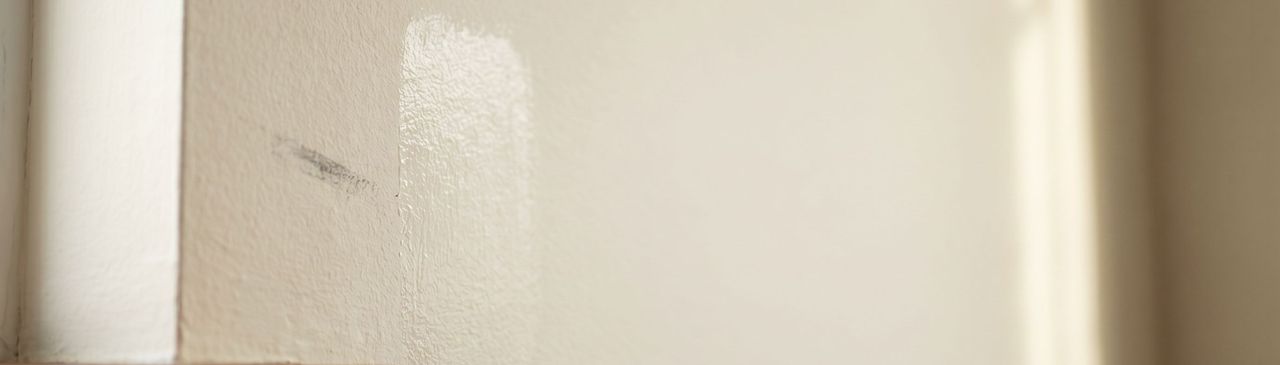
When touch-ups turn into trouble
- Color shift: paint fades, so the “exact” shade in the can may look darker or grayer on your wall.
- Sheen flash: wall sheen dulls over time; new satin on old satin can shine like a spotlight.
- Texture mismatch: brush strokes on a roller-finished wall create a quilt pattern.
- Hidden stains: water spots or old nicotine bleed right through fresh paint.
The result? A dotted wall that steals more attention than the original scuffs — often the point where homeowners call us saying, “I tried… can you fix the fix?”
Four reasons a full repaint often wins
- Consistency: four flawless walls beat fifteen blotchy squares.
- Longevity: two premium low-VOC coats last 8–10 years.
- Home-value pop: freshly painted interiors attract higher offers and faster closings.
- Time: one professional crew finishes in a day; DIY trial-and-error can eat multiple weekends.

Quick decision flow
- Can you live with a possible mismatch? Yes → try a touch-up. No → schedule a repaint.
- Selling within 12 months? Yes → repaint; it pays for itself. No → touch-up is fine if the color match is perfect.
- More than three damaged spots in one room? Yes → time to repaint. No → a touch-up could work.
Our honest take
At Tigran's Precision Painting we always start with a free on-site assessment. We test a discreet square with your leftover paint. If it blends invisibly, we finish the touch-ups right then — no upsell. If the patch flashes or the color is off, we give you a flat-rate quote for a full interior repaint so you can decide with clear numbers.
Frequently asked questions
Should I touch up or repaint a wall?
Touch up if the damage is small, the paint is under about two years old, and you have the original paint stored well. Repaint if the wall has multiple marks, the paint is three or more years old, or you don't know the exact color and sheen — touch-ups on aged paint tend to flash and mismatch.
Why does my paint touch-up look different from the rest of the wall?
Three usual culprits: the original color has faded so the exact paint no longer matches, the wall's sheen has dulled while the new paint shines, or the texture differs because a brushed patch sits on a rolled wall. Feathering the edges and matching the roller nap helps, but aged walls often still show it.
Can you touch up paint that's a few years old?
Sometimes, but the odds of a clean blend drop with age. I test a discreet patch with your leftover paint first; if it disappears, great — if it flashes, a full wall or room repaint is the cleaner fix.
Does Chattanooga humidity affect paint touch-ups?
It can. In bathrooms, kitchens, and laundry rooms, steam and our humid summers speed up sheen changes and can encourage mildew, so those rooms are more likely to need a full repaint than a spot fix.
How much does a touch-up cost versus a repaint?
A DIY touch-up is a quart of paint and twenty minutes; a professional single-room repaint costs more but gives you uniform color and sheen plus a warranty. The cheat sheet above breaks down when each makes sense.