Interior painting has a few places where a homeowner can honestly lower the price, and a few where saving money now means paying for it again in a year or two. The difference usually comes down to what the crew spends its hours on: moving furniture and waiting on decisions, or preparing and painting the surfaces you will look at every day.
Below is how we think about it on interior painting jobs across Chattanooga — what you can take off the bill, what drives the cost up, and where cutting corners shows.
Where you can save
Do some of the prep yourself. Moving furniture, removing outlet covers, or taping off baseboards can shave time off the job. Just let us know in advance so we can plan around it.
Hold off on decor. Curtains, rugs, and accent pieces can wait. Focus your budget on the surfaces you live with every day.
Have a plan. The biggest money-waster is indecision. Clear timeline, colors, and goals keep everything fast and smooth.

Where you shouldn't cut corners
Hiring a professional painter. The details matter. Uneven coverage, roller marks, or sloppy edges ruin the whole look. We deliver straight lines, clean cut-ins, and a polished finish.
Using low-quality paint. Cheap paint often takes more coats, wears down faster, and is harder to clean. We use Sherwin-Williams because it lasts longer, looks better, and saves money over time.
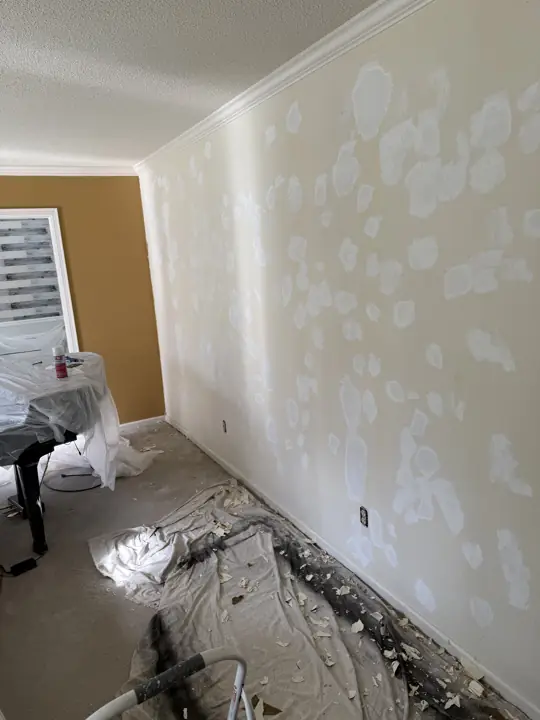
Skipping surface prep. Even the best paint won't hide flaws. We start every job with proper patching, sanding, and priming — because smooth walls make for a flawless finish.
Why Chattanooga homeowners
choose us
- Free same-day estimates
- Fully licensed and insured
- Professional-grade Sherwin-Williams paint
- Interior painting specialists — no shortcuts, no mess, no surprises
- 2-year workmanship guarantee on every project
Common questions
How much does interior painting cost? It depends on the size of the space, wall height, surface condition, and color transitions. See our painting cost calculator for an estimate.
How long will the project take? A single bedroom usually takes one day. A full interior repaint takes 3 to 5 days depending on complexity. We clean up at the end of each day.
Do I need to buy the paint? No — we handle that. We use Sherwin-Williams products at professional pricing, which keeps your costs lower while ensuring top-tier quality.
What actually drives the price of a room
Two rooms of the same size can price very differently. These are the factors that change the number most:
- Wall condition. Nail holes, dents and old anchors all need filling, sanding and spot-priming before paint. A long wall with dozens of dings can take longer to prep than to paint.
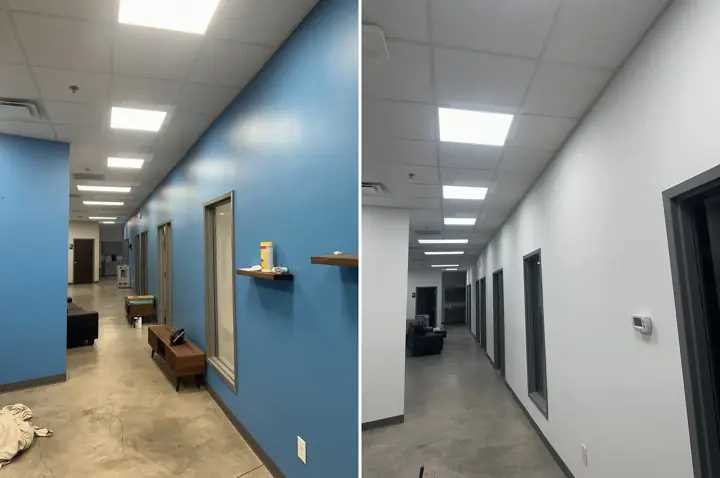
- Big color changes. Going from a deep color to white, or from a dark wall to a light one, often needs an extra coat so nothing shows through.
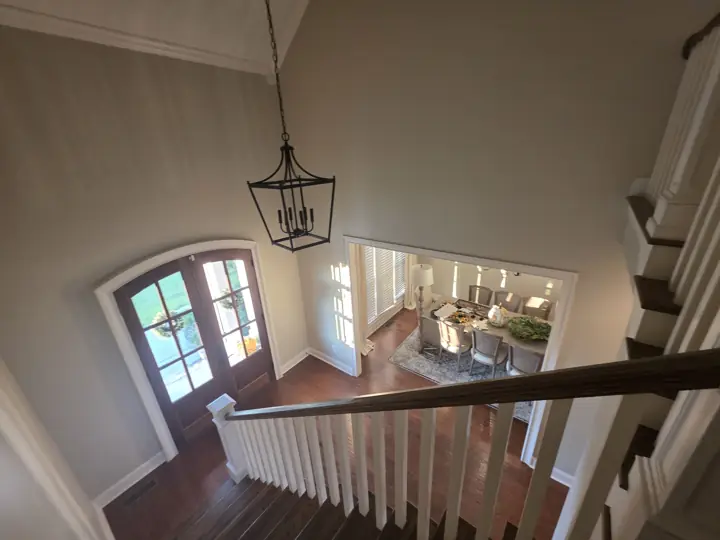
- Height and access. Two-story foyers, stairwells and vaulted ceilings need tall ladders or scaffolding and more setup time.
- Ceilings. Repainting a ceiling is one thing; removing an old textured finish first is a much bigger job.
- Number of colors and trim. Every accent wall, two-tone scheme and painted trim run adds careful cutting-in.
Knowing this helps you decide where to spend: if the budget is tight, it is usually smarter to keep the color plan simple and pay for proper wall prep than the other way around.
Simple ways to keep the bill down
- Paint connected rooms in one visit. One setup, one floor protection and one cleanup cost less than coming back three times.
- Keep one color across connected spaces. A single wall color through hallways and open areas means fewer color breaks to cut in.
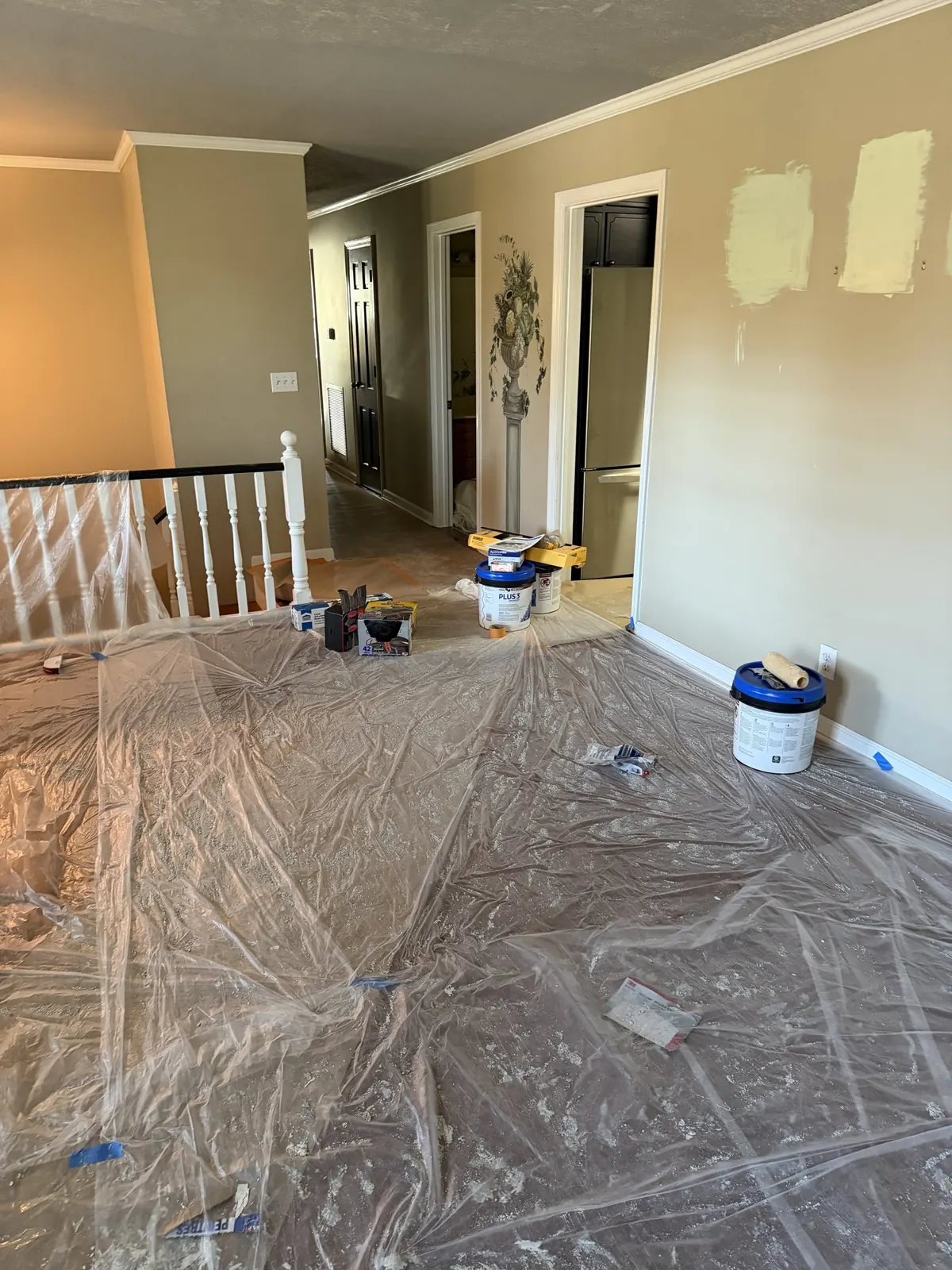
- Decide colors before the start date. Paint sample patches on your own walls a week ahead and look at them morning and evening. Changing your mind mid-job is the most expensive decision in painting.
- Clear the rooms yourself. Small items, wall decor, curtains and electronics off the walls and out of the way — tell us in advance, and the estimate can reflect it.
- Ask what can stay. If ceilings or trim are already clean, white and in good shape, they may not need a new coat at all.
Where the hours go on real jobs
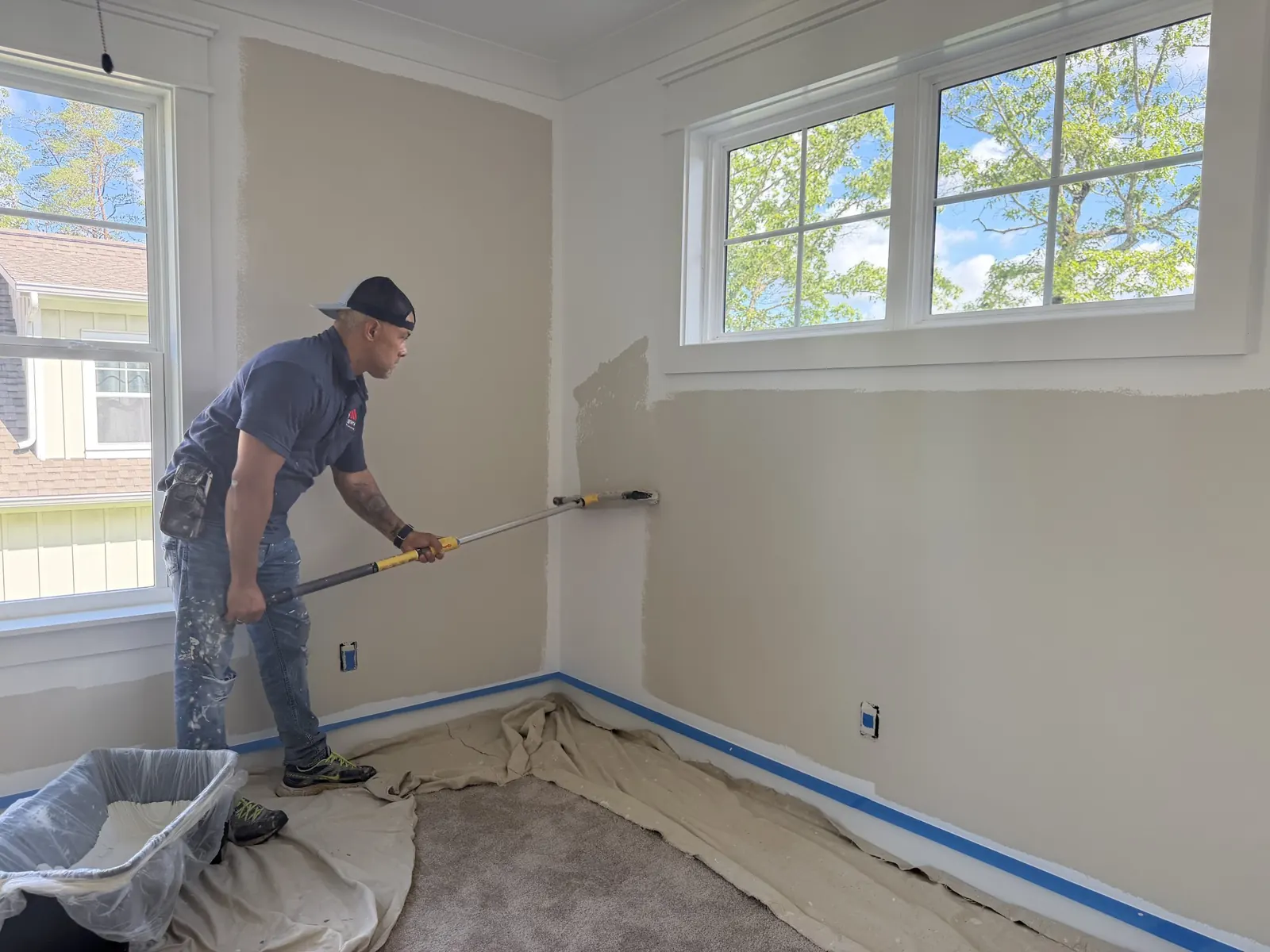
Examples from recent projects in our gallery: